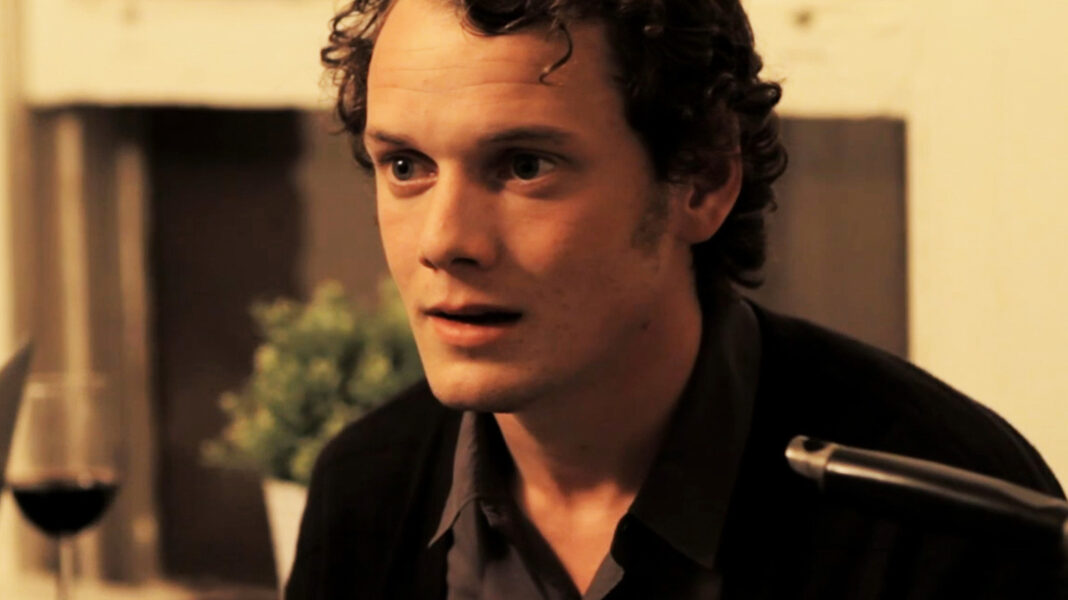
Anton Yelchin is best known for playing Pavel Chekov in the Kelvin Timeline “Star Trek” movies. But his 2011 romantic drama “Like Crazy” is easily one of the best and most overlooked gems in the late actor’s filmography. Yelchin, who passed away at the age of 27 in 2016, starred in the film opposite Felicity Jones and both gave great performances. But if that’s not enough to tempt the uninitiated, perhaps a pre-“Hunger Games” Jennifer Lawrence might do the trick?
Yelchin’s earliest projects included the Stephen King flop “Hearts in Atlantis.” But the young actor soon went on to better things, appearing in films alongside Robert De Niro and Morgan Freeman all before he was even a teen. He continued to see success in his teenage and young adult years, landing lead roles in 2006’s “Alpha Dog” and 2007’s “Charlie Bartlett.” Of course, his biggest break came when the Soviet Union-born, California-raised actor landed the part of Pavel Chekov in J. J. Abrams’ “Star Trek” reboot film in 2009. He reprised the role in two sequels, 2013’s “Star Trek Into Darkness” and 2016’s “Star Trek Beyond,” but between those first two movies, he found time for a charming little romantic drama made on a shoestring budget.
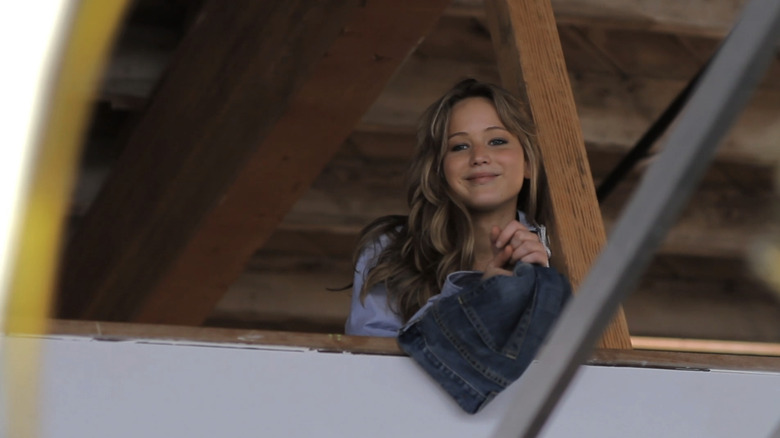
“Like Crazy” saw Yelchin star as Jacob Helm, an American student who falls for Jones’ British exchange student Anna Gardner, only for the pair to grow apart due to their long-distance relationship. Lawrence, who recently gave a career-best performance in “Die My Love,” co-starred as Samantha, Jacob’s girlfriend. Despite positive reviews, “Like Crazy” failed to make much of an impression when it debuted, which is a shame because it’s a heartfelt drama more than worthy of a watch — and not only because Yelchin, Jones, and Lawrence deliver great performances.
Like Crazy was a low-budget, mostly improvised critical hit that nobody saw
After making his debut as Pavel Chekov in 2009, Anton Yelchin, whose life story was told in the heartbreaking 2019 documentary “Love Antosha,” stayed with big budget sci-fi when he played Kyle Reese in McG’s sort of okay “Terminator: Salvation.” The following year, however, he took things in a decidedly different direction, appearing in the Japanese teen drama “Memoirs of a Teenage Amnesiac.” 2011 also saw him continue this more low-key approach with “Like Crazy.”
It’s said that you should write what you know, and with this movie, that’s exactly what writer-director Drake Doremus did. The film, which Doremus co-wrote with Ben York Jones, is based on Doremus’ own experiences maintaining a long-distance relationship with a woman living in London. As the director once explained to The Guardian, he wanted to create a film so intimate that it almost made audiences feel uncomfortable and started by penning a “50-page outline” that featured little to no dialogue. “[It] was very specific,” he recalled. “It had a lot of backstory, a lot of scene objectives, subtext, plot points, emotional beats, and things.” This required the movie’s stars to essentially improvise most of their lines in an attempt to, in Doremus’ words, keep the scenes “fresh, spontaneous, and alive.”
With that in mind, it’s not all that surprising to learn that Doremus’ mother co-founded The Groundlings improv troupe, whose extemporaneous stylings were also at the heart of “Like Crazy.” It seemed to work, as the film — made for just $250,000 — won the Grand Jury Prize at the 2011 Sundance Film Festival and debuted to positive reviews that same year. So, why haven’t you seen it? Well, don’t feel bad, you’re certainly not the only one.
Like Crazy is an overlooked gem that takes a realistic approach to long-distance love
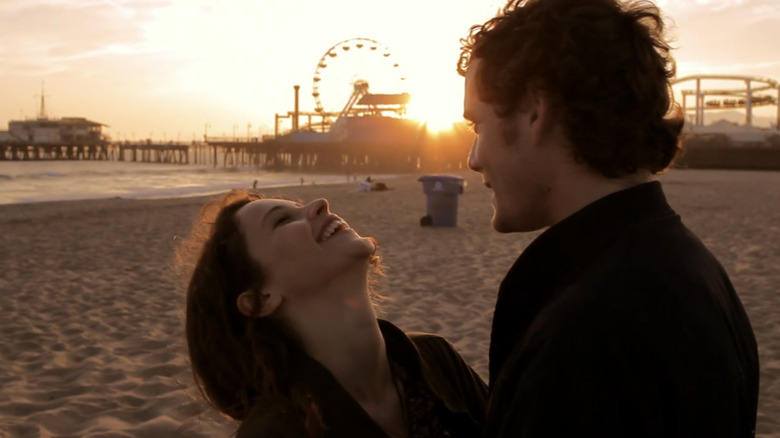
When “Like Crazy” opened in theaters in October 2011, it grossed $3.7 million at the global box office. Not bad for a film made on a $250,000 budget, but that’s still not exactly the kind of opening that ensured mass audiences got to experience Drake Doremus’ heartfelt, improvisational experiment. That’s a shame, because it’s a charming, if sad, little film that deserved more attention than it ultimately got.
“Like Crazy” might not be remembered as one of the best romance movies of all time, but it would’ve had a shot at joining their ranks if, again, more people had actually watched it. The film is certainly noteworthy for its performances and Doremus’ unique approach, which resulted in a movie that at times felt almost too realistic. Critics were certainly struck by it. “Like Crazy” maintains a perfectly respectable 70% score on Rotten Tomatoes, with Peter Bradshaw (in his review for The Guardian) commending it for being “a grownup love story” and one big “reminder of the awful fact that all choices are permanent, to some degree” and that “life cannot be rewound and done over.”
Yes, “Like Crazy” isn’t exactly the most sanguine love story you’ll ever watch, but that’s sort of what makes it interesting. The film is realistic not only in its aesthetics and approach to performance, but it also feels authentic when it comes to its handling of long-distance relationships, which are every bit as difficult as the clichés would have you believe. Otherwise, it’s always interesting to watch established stars in their younger years, and this is a real gem in both Anton Yelchin and Jennifer Lawrence’s filmographies.
